

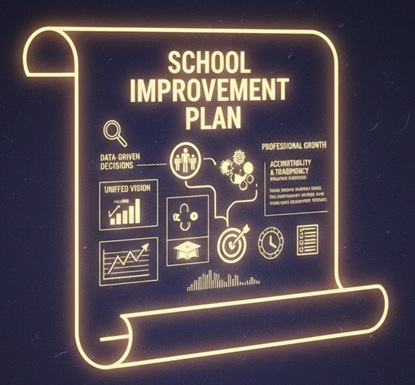
A School Improvement Plan (SIP) is more than just a bureaucratic requirement; it is a strategic roadmap that defines a school’s vision and the tangible steps required to achieve it. Without a structured plan, schools often operate in a reactive mode, addressing problems as they arise rather than proactively building a culture of excellence.
Why Every School Needs a Strategic Improvement Plan
In the world of education, “standing still” is often the equivalent of falling behind. As student needs evolve and pedagogical technologies advance, schools must have a clear sense of direction. The School Improvement Plan (SIP) serves as the primary mechanism for this evolution.
1. Data-Driven Decision Making
The most significant advantage of an SIP is that it replaces guesswork with evidence. A well-crafted plan begins with a deep dive into data—standardized test scores, attendance rates, and student well-being surveys. By identifying specific gaps in performance, leadership can allocate resources where they are needed most rather than spreading them thin across ineffective programs.
2. Creating a Unified Vision
Schools are complex ecosystems involving teachers, parents, students, and administrators. Often, these groups have different priorities. The SIP process brings these stakeholders to the table to agree on a common set of goals. When a teacher knows that the school’s singular focus for the year is “Literacy across the Curriculum,” their individual lesson planning becomes aligned with the broader institutional mission.
3. Accountability and Transparency
An SIP isn’t just a list of dreams; it includes Key Performance Indicators (KPIs) and timelines. This creates a level of professional accountability. It allows school boards and the community to see exactly what the school is aiming for and how it intends to get there. It transforms “trying to do better” into “achieving 5% growth in reading proficiency by June.”
4. Professional Growth for Educators
Improvement plans often highlight the need for specific professional development. Instead of generic workshops, the SIP ensures that teacher training is directly linked to student needs. If the data shows a struggle in math, the SIP prioritizes specialized math coaching, ensuring that the staff’s growth directly benefits the classroom.